


New
Are you ready for Agentforce? Take our assessment to find out today!
    • Expertise
          • Product

          • Sales Cloud
          • Service Cloud
          • Account Engagement
          • Marketing Cloud Next
          • Revenue Cloud
          • Agentforce
          • Data 360 (Data Cloud)
          • CRM Analytics
          • Tableau Next
          • Experience Cloud
          • Industry

          • Manufacturing
          • Healthcare
          • High Tech
          • Financial Services
          • Media & Entertainment
    • Solutions
      • Consulting
      • Implementation
      • Managed Services
      • Health Check
      • Training
    • About Nebula
      • We Are Nebula
      • Meet the Team
      • Join Our Team
    • Resources
    • Login
    • Get in Touch
Share:

Keep Your Platform Organised with Tags

by Noorbanu Muraj
3rd July 2019 • 4 min read
Noorbanu Muraj
Share:

As a Pardot marketer, it’s important to keep your platform organised and follow Pardot best practices to ensure it operates in the way you need it to. Like every other platform, Pardot works best when it’s organised. A worthy way to implement this is through the use of Pardot Tags.

That’s right, I said Tags!

I’m going to take you through why Pardot Tags are such a valuable component and the many ways to use them. By the end of this post I’m sure you will also agree that Pardot Tags are much more than just a “label” for your assets.

What are Tags?

Tags are lightweight flexible taxonomy. They are used in organising, sorting, filtering data, and reporting. Every asset in Pardot can be tagged with one or multiple keywords or phrases.

 Main benefits

  • Easier to locate the asset that you’re working with on a regular basis
  • Filter your view to see only specific Pardot assets and their performance
  • Segment your prospect database based on the applied Tags
  • Keeps your Pardot instance organised

A Tag has 1:M relationship with a marketing asset. This means that you can apply multiple Tags to your marketing asset and search for assets specific to a word or group of words.

Tags can be applied to prospect records and most assets – Campaign, Folder, Email Template, List Email, Form, Landing Pages, List, Segmentation Rule, etc. 

Recommended use cases

Sort Prospects

Create a custom criteria for your prospects and tag the ones that fit. This will allow you to easily pull the tagged prospects for review or reporting. 

Track Campaign Touch Points

You can apply a Tag when a prospect has taken part of some of your key campaigns like event registration, guide download, or meeting request. With Tags you will have the ability to view an overview of your campaigns and see the ones where your prospects are the most engaged.

Group Pardot Assets 

Use Tags on your assets to gather better insight on how the segments, region, content type or year influences your marketing performance. 

By applying more than one Tag to the asset, more detailed reporting will be available for the global team.

For example, with both region and content type Tags applied on sent emails, you will have visibility on the performance of sent gated content emails across the regions. 

With that information, you will know what regions would need further advice / recommendations to help them improve their campaigns.

For more Pardot Tag use cases, have a read of this Salesforce Blog.

Processes

The default place to create tags is through the Marketing > Segmentation > Tags page in Pardot. However, you can also create them while assigning them to the prospects / assets. That is possible through multiple ways, see them below. 

Prospects

  • You can edit a prospect record and add a Tag manually

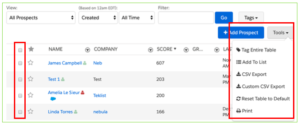
  • Use the multi-checkbox to select multiple prospects and applying a Tag to all relevant prospects. Prospects | Tools | Tag Entire Table
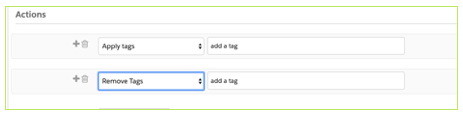
  • Add or remove Tags through a Completion Action on a Form, Automation Rule or Engagement Studio program.
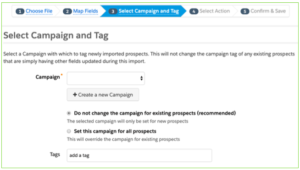
  • You can also add Tags to prospects while importing prospect lists.
 Assets

  • Manually add Tags by editing the asset in Pardot.

  • Add Tags to multiple assets through Table Actions 

Recommendations

  • Discuss the Tag groups with your users and agree on the best use cases
  • Keep the number of used Tags to a minimum. Although there is a lot of headroom, Tags can be used up very quickly especially when you have many users. If you have too many Tags, it can confuse the users and lose its point easily. Read how you can delete or combine Tags here.
  • Make sure that the teams know that Tags are not a substitute for folders or proper naming conventions. Do not rely on only them as they are limited in search and reporting capabilities
  • Write a guideline document that users can use as a reference point


Hopefully you will now use Pardot Tags in many more ways to keep your instance organised and with sorting and filtering your Pardot assets. Get in touch if you want to know more about how you can benefit from Tags in your Pardot today.


 

Find related resources by topic

Marketing

You may also be interested in

Fix the Foundations: Success in the Agentic Era Marketing Edition
Blog
Marketing

Fix the Foundations: Success in the Agentic Era Marketing Edition

We hear the announcements and on repeat about how the Agentic Era is here to transform the B2B and B2C landscapes. These changes will enable…

4 min read Read Blog
Laying the Right Foundations
Success Story
Account Engagement Sales Cloud

Laying the Right Foundations

Complex processes and cautious stakeholders hindered Redwheel's CRM adoption. Nebula's Account Engagement and Salesforce audits mapped the journey, restoring confidence and delivering a strategic roadmap for a powerful, sales-enabled CRM.

May 27, 2025 Read Customer Story
How to Avoid Completion Action Limits in Account Engagement (Pardot) Using Engagement Studio
Blog
Marketing

How to Avoid Completion Action Limits in Account Engagement (Pardot) Using Engagement Studio

Conditional completion actions and completion actions, while powerful, can quickly consume the available limits on your forms and form handlers. If you’ve been creating and managing…

3 min read Read Blog
Aligning Marketing and Sales for a Global Insurer
Success Story
Account Engagement Sales Cloud

Aligning Marketing and Sales for a Global Insurer

Poor email deliverability and disconnected data misaligned Lockton's sales and marketing. Nebula's Salesforce and Account Engagement integration established governance, delivering a 97% delivery rate, 25 empowered users, and transparent insights.

Apr 30, 2025 Read Customer Story
Upgrade Your Form UX with Toggle Switches
Blog
Marketing

Upgrade Your Form UX with Toggle Switches

If you would like to modernise your forms, provide a slicker user experience, and match contemporary web design, follow our mini guide that helps you…

2 min read Read Blog
Creating a seamless membership experience
Success Story
Account Engagement Sales Cloud Service Cloud

Creating a seamless membership experience

Data silos and disparate systems hindered the World Travel and Tourism Council's membership experience. Nebula's Cvent integration, record cleansing and automated invoicing delivered rapid efficiency, unified data, and a 10-year partnership.

Jan 30, 2025 Read Customer Story
Account Engagement Landing Page Conversion Mastery
Blog
Marketing

Account Engagement Landing Page Conversion Mastery

Building pages that truly perform in Account Engagement isn't just about clicking buttons; it's about strategy, technical finesse, and empathy for the user. Here’s my…

5 min read Read Blog
Targeted Sales Enablement for Users
Success Story
Account Engagement CRM Analytics Sales Cloud

Targeted Sales Enablement for Users

Stale opportunities and missing data delayed Clarion Events' pipeline. Nebula's Einstein Next Best Action delivered intuitive guidance, surging stage moves by 132%, doubling activities, capturing crucial VAT details, and boosting CRM adoption.

Jan 3, 2025 Read Customer Story
5 Hidden Snags in Account Engagement
Blog
Marketing

5 Hidden Snags in Account Engagement

Managing Salesforce Account Engagement (Pardot) requires more than just marketing knowledge. Even in a well-established org, you can sometimes hit some invisible walls. Below are…

4 min read Read Blog
5 new Marketing Cloud Next features we’re excited to try
Blog
Marketing

5 new Marketing Cloud Next features we’re excited to try

The Spring ’26 release is here, and it’s a significant milestone for Marketing Cloud Next (also known as Agentforce Marketing). This release focuses on making…

4 min read Read Blog
Nebula

Our journey started in 2012 with a clear vision and core values. Nebula is dedicated to empowering our customers through fostering relationships founded on collaboration, flexibility, and trust.

  • We Are Nebula
  • Resources
  • Join Our Team
  • Terms and Conditions
  • Privacy Policy
The Space Aldgate,
Irongate House,
22-30 Dukes Place,
London EC3A 7LP
+44 207 112 8026
Get in Touch
Copyright © 2026 Nebula Consulting. All Rights Reserved.