


Data is like pieces of a puzzle – they can create a great picture if you put them together, but if you have them distributed in five different rooms, even when you know you have a picture, you can’t see it.
That is where Data 360 comes in and helps you centralise data from any source (AWS, Google, Snowflake, or other Salesforce Orgs, etc.). It doesn’t matter whether you have structured, semi-structured, or unstructured data; Data 360 can manage all of it.
The semantic Model sits between a messy database and a human being, translating the raw data into the language a person understands.
Data 360
Data 360, as the name suggests, leverages public or private cloud environments to enable real-time data access and analysis across the whole organisation. It acts as the “connective tissue” for your business, but it does more than just store data; it performs two vital tasks:
- Breaking the Silos: Data 360’s magic is matching. It takes a “website click” from an anonymous ID and an “in-store purchase” from a credit card and realises they both belong to the same person. It merges these fragments into one single Unified Profile.
- Real-Time Action: Unlike older systems that took days to update, Data 360 updates in real time. This means that if a customer’s behaviour changes, your business can respond immediately.
Once you see the whole picture, you can make better decisions that will lead to higher revenue and happier customers for you and your business.
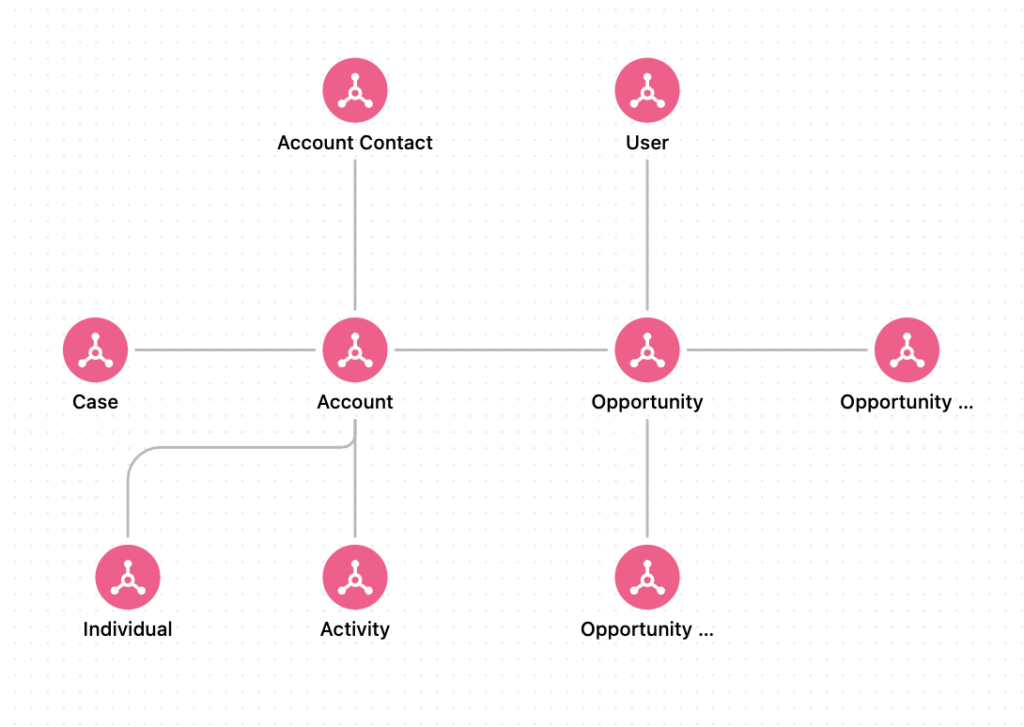
Semantic Model
In a raw database, information is often stored in ways that make sense to computers but not to people. The semantic model acts as a “logic layer” that clarifies three things:
The Power Couple
One offers storage, the other one understanding. Data 360 is like a massive library containing every book in the world. It’s a very impressive library, but if the books are in 50 different languages and have no page numbers, it’s impossible to find what we need. Luckily, we have a Semantic Model that, in this example, acts as a very helpful librarian who has read every book, translated them into English, and created a master index.
Conclusion
In today’s business world, having a lot of data is no longer a competitive advantage – everyone has data. The real advantage comes from how quickly you can turn that data into action.
By combining the centralising power of Salesforce Data 360 with the clarity of a Semantic Model, businesses can finally stop looking at scattered puzzle pieces and start seeing the clear, actionable picture they create. It transforms data from a confusing collection of parts into a strategic map for the future.