

Introduction
AI has dominated tech headlines, driving significant efficiency gains; yet systems often remain siloed and data scattered. Traditionally, API integrations linked systems together, but they required developer support and considerable time to understand API contracts and data models. In this post, we explore Model Context Protocol (MCP) servers, a modern approach to connecting systems and the key considerations for implementing them.
What Are They?
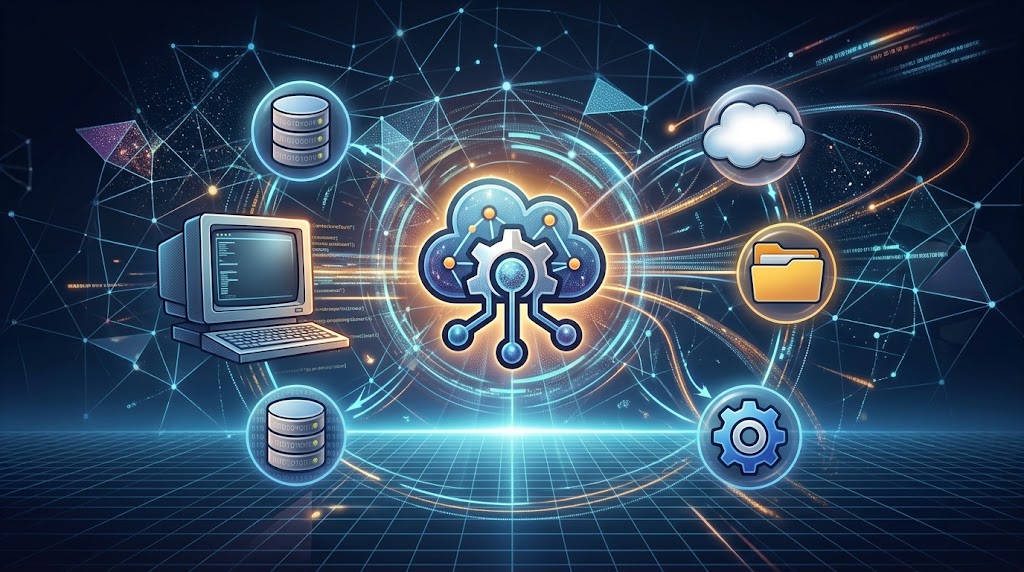
The Model Context Protocol (MCP) acts as a ‘universal adapter’ for AI, much like a USB-C port for your devices.
The architecture can be broken down into three main components:
- Host: The AI application (e.g., Claude Desktop, Agentforce, ChatGPT Desktop).
- Client: Runs within the host to facilitate the connection.
- Server: Securely exposes specific capabilities, tools, and resources (such as Salesforce data) to the AI.
This common interface allows you to connect multiple enterprise systems to the host, creating a single unified touchpoint for your entire business ecosystem. It removes the need to maintain bespoke integrations, as the Large Language Model (LLM) automatically discovers and utilises the tools the server provides.
Use Cases
Seamless Data Access
Imagine you have a last-minute customer meeting to help close a critical deal, but you lack context on their business or active pipeline. Since this data lives in Salesforce, a connected MCP server allows you to retrieve it instantly using natural language. For example:
“Summarise my customer’s business, show me their top three pipeline deals, and highlight any important information that might help me win this deal.”
A single prompt like this can quickly bring you up to speed.
Streamlined Customer Support
When a support specialist identifies a product fault during a customer chat, they no longer need to manually create a case and escalate it across different platforms. Instead, they can use a prompt like:
“Create a case in Salesforce with the following chat log summary, escalate the issue to engineering, and create a Jira ticket in the developer support backlog.”
This prompt calls two MCP servers: one connected to Salesforce and the other to Jira. Instead of logging into separate systems and navigating multiple forms, the specialist executes the entire workflow seamlessly through natural language.
Cost
Naturally, this capability comes with cost implications. At the time of writing (September 2026), upcoming changes targeting November will add MCP calls via agents to the standard flex credits consumption model.
Salesforce is introducing a new ‘Agentic Identity’ to distinguish MCP servers running as standard users from those running as agents with scoped permissions. While the exact multiplier for this usage type remains unconfirmed, it is a crucial factor to evaluate before transitioning your enterprise to an MCP-first approach.
Fortunately, sandboxes, scratch orgs, and developer edition orgs are not impacted, meaning you can safely use these environments for testing.
Conclusion
MCP servers offer a powerful way to interact with business systems. While they provide another option for cross-system integration, they do come with a financial cost. As AI continues to evolve, adopting a unified, natural-language interface will become crucial for maintaining a competitive advantage.
Whether you need guidance on evaluating the right approach or help setting up a proof of concept, get in touch with the Nebula Consulting team here.