



Salesforce Spring ‘26 is not an announcement of shiny AI features, but rather about fixing the foundations of the Agentic Enterprise and everything that comes with it. After reviewing every page of the 826 page release notes, our team identified several features that will have an impact on how developers build, grow and maintain enterprise solutions with Salesforce.
This release removes friction at every layer, from API design to UI components making it possible to deliver sophisticated solutions without accumulating technical debt. Here’s what matters for developers, architects, and business teams planning their next phase of Salesforce evolution.
Platform & Data Foundations
Apex Cursors: Finally, Pagination That Makes Sense
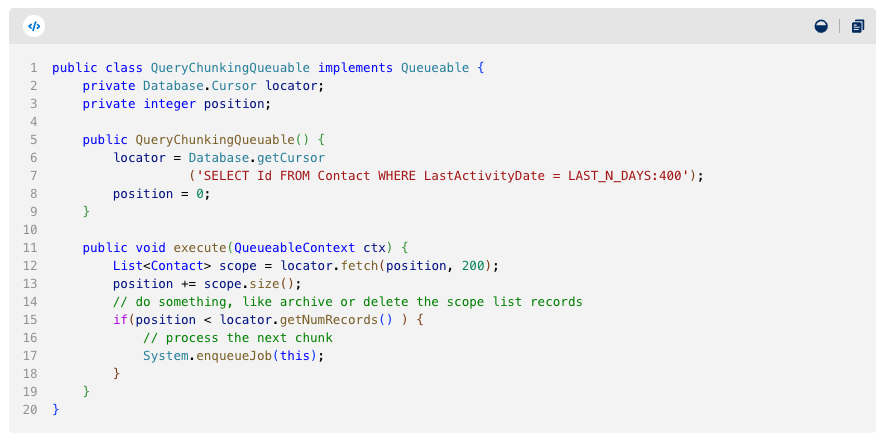
What It Is: Spring ’26 brings Apex Cursors to general availability with a new PaginationCursor handling mechanism for SOQL query results.
Why It Matters: The cursor-based approach with fetchPage(start, pageSize) replaces LIMIT/OFFSET patterns that frequently hit governor limits and create performance bottlenecks with large datasets.
Nebula’s Take: “We’ve spent years building pagination workarounds. Now we finally have a native, scalable solution,” explains Paul, our Principal Developer. For UI list queries, this means faster load times and significantly less code to maintain. Any feature that provides more headroom whilst improving performance is transformative.
Key takeaway: Apex Cursors finally make large-scale UI pagination performant, predictable, and maintainable.
Extract Picklist Values Based on Record Type

What It Is: Native Apex support for extracting picklist values based on Record Type, eliminating workarounds developers have used for years.
Why It Matters: Record Type-aware dynamic forms and conditional logic previously required complex describe calls or custom metadata caching strategies.
Nebula’s Take: “There have been various hacks over the years to accomplish this, so it’s satisfying to see a native solution,” says Dan, our Head of Development. This touches dynamic form generation, validation rules, and data quality processes. Having a clean, native API reduces code complexity across the board.
Key takeaway: Native picklist extraction by Record Type eliminates technical debt from countless form and validation implementations.
Integration & Security
Connected Apps Sunset: Time to Migrate
What It Is: Creation of new Connected Apps is disabled by default in Spring ’26. External Client Apps are now the only supported path for integration configurations.
Why It Matters: External Client Apps offer better security postures, more granular control, and alignment with contemporary OAuth standards.
Nebula’s Take: “For anyone still building new integrations the old way, Spring ’26 is your wake-up call,” Paul notes. At Nebula, we’ve been guiding clients toward External Client Apps for the past year. The transition requires planning, but the security and maintainability benefits justify the effort.
Key takeaway: Audit your integration architecture now and plan migration paths before Connected Apps become fully deprecated.
If you’re already planning your Spring ’26 rollout, this is the point where architecture decisions start to matter. We’re helping clients assess which changes require refactoring versus simple enablement.
Automation & Governance
Flow Version Comparison: Bringing Git Concepts to Declarative Development
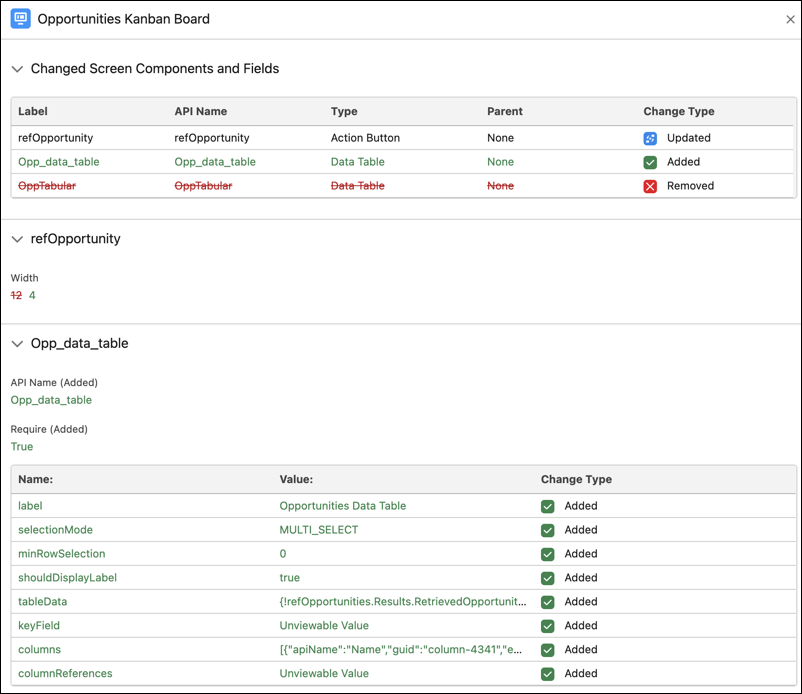
What It Is: Screen Flow builders can now compare versions using a “Compare Versions” action directly from the Flow’s record in the Automation app.
Why It Matters: Understanding what changed between Flow versions has historically required archaeological work through inadequate documentation.
Nebula’s Take: “For those familiar with Git, you’ll immediately understand the value,” Jason explains. “This brings transparency and change management to Flow development that’s been missing for too long.” For heavily regulated industries with dozens of Flow versions, this changes how teams collaborate, conduct reviews, and maintain institutional knowledge.
Key takeaway: Flow Version Comparison enables proper change management and code review practices for declarative automation.
Flow Approval Process Integration
What It Is: The ‘Send for Approval’ button is now available natively for Flow-based approval processes, eliminating custom buttons or Flow triggers.
Why It Matters: Flow approvals have been possible for years, but the user experience gap kept many organisations on classic approval processes.
Nebula’s Take: “We’ve had clients stick with classic approval processes purely because of UX,” Libby notes. “Now that barrier is removed, and we can confidently recommend Flow approvals for their flexibility and maintainability.” Salesforce is systematically removing any UX disadvantages compared to legacy tools.
Key takeaway: Flow approvals are now the obvious choice for modern governance and compliance workflows.
Modern UI & Developer Experience
Complex Template Expressions in Lightning Web Components
What It Is: Lightning Web Components can now use complex expressions directly in HTML templates (Beta), reducing reliance on JavaScript getters.
Why It Matters: Previously, any logic beyond basic data binding required verbose JavaScript getter methods, creating bloated component code.
Nebula’s Take: “For anyone building sophisticated UI components, this is a game-changer,” Jason observes. “Conditional rendering that requires getters like get showWarning() { return this.value > 100 && this.status === ‘active’; } can now be handled inline.” This reduces code volume and makes templates self-documenting.
Key takeaway: Complex template expressions reduce JavaScript bloat and improve LWC component maintainability.
Custom Lightning Web Components in Dashboards
What It Is: Custom Lightning Web Components can now be embedded directly in Dashboards (Beta) to create interactive data views.
Why It Matters: Standard Dashboard components are powerful but limited for complex data visualisation needs.
Nebula’s Take: “Web components landing in the Dashboard world could be transformative for complex data representation,” Jason explains. “We can now create interactive, context-aware visualisations that live directly in the Dashboard interface.” For clients in data-intensive sectors, this enables custom components that respond to filters, refresh in real-time, and provide drill-down capabilities within the same interface.
Key takeaway: Custom LWC in Dashboards unlocks sophisticated, industry-specific data visualisation without building separate pages.
Error Console for Lightning Web Components
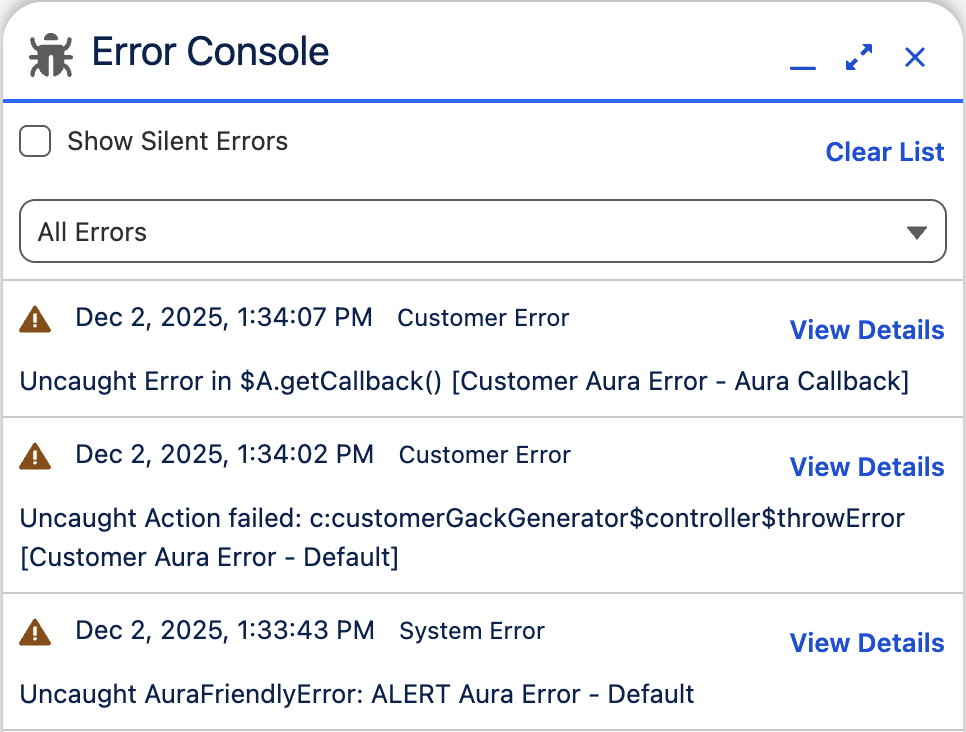
What It Is: A new built-in Error Console displays page errors within Salesforce, eliminating the need to open browser developer tools during LWC development.
Why It Matters: Small friction points like context-switching between Salesforce and browser consoles slow iteration cycles.
Nebula’s Take: “This is incredibly convenient for LWC development,” Libby notes. “Being able to see errors without opening the browser console meaningfully improves development flow.” For complex Lightning pages with multiple components, having error context immediately visible means faster diagnosis and less context-switching during demos or training.
Key takeaway: The built-in Error Console removes friction from daily LWC development and improves productivity.
Dynamic Event Listeners with lwc:on

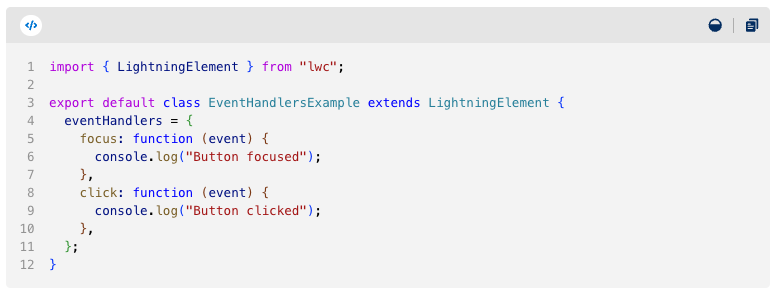
What It Is: The new lwc:on directive enables dynamic event listener binding, similar to standard JavaScript patterns.
Why It Matters: Event handlers in LWC templates were previously static declarations. Dynamic behaviour required manual DOM manipulation through lifecycle hooks.
Nebula’s Take: “This brings LWC in line with modern JavaScript frameworks,” Libby explains. “You can now compute handlers based on component state or pass them via @api properties, making composable component libraries more elegant.” A reusable button can accept event handlers as properties rather than requiring custom event propagation.
Key takeaway: Dynamic event listeners enable more reusable, composable LWC component architectures.
Consistent Empty State Illustrations with Theme Support

What It Is: Standardised components for displaying empty states that respect user theme preferences, including dark mode (Beta).
Why It Matters: Empty states shape user perception of application quality and professionalism.
Nebula’s Take: “We’ve been rolling our own version for years to build a UI that aligns with Salesforce standards,” Dan explains. “Having this available out of the box with theme support means faster development and better consistency.” For branded Experience Cloud sites, these components reduce design debt.
Key takeaway: Native empty state components with theme support improve UX polish without custom development effort.
Agentic Enablement
Exposing Apex Methods as Agent Actions
What It Is: Apex REST and AuraEnabled Controller Methods can now be exposed as Agent Actions (Generally Available), offering a more flexible alternative to InvocableMethod.
Why It Matters: The InvocableMethod implementation was restrictive and didn’t map cleanly to existing code patterns.
Nebula’s Take: “InvocableMethod always felt like a compromise,” Dan explains. “Being able to expose existing REST endpoints or AuraEnabled methods as Agent Actions means we can integrate AI workflows without refactoring proven code.” For organisations with mature Salesforce implementations, this lets you leverage what already works rather than forcing new patterns.
Key takeaway: Apex Agent Actions enable Agentforce integration without rewriting or duplicating existing business logic.
The Future of Trust and Integration
Beyond developer-specific picks, Spring ’26 reinforces security with the mandatory migration to External Client Apps (ECAs) for all new integrations. This more secure framework, combined with new native malware scanning for file uploads , ensures that as enterprises become more agentic, they remain grounded in a foundation of trust.
Spring ’26 is more than a seasonal update; it is a strategic roadmap for the next generation of business efficiency. At Nebula Consulting, we are ready to help you navigate this evolution and turn the promise of AI into measurable success. Let’s build the future together.


